




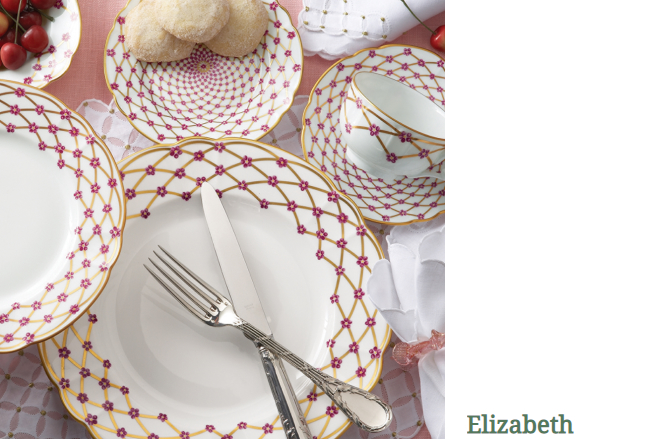
The Limoges, France region is a consortium of small, specialized factories.
The Limoges region is actually a consortium of small, specialized factories. It is known as the ceramic capital of France. Any company that manufactures china and porcelain there has the right to call themselves “Limoges”. Conversely, any company that doesn’t manufacture china there does not have the right to call themselves “Limoges”.
Porcelain has been made in Limoges since 1735.
Porcelain has been made there since 1735 when the secret of porcelain-making was discovered in Europe, shortly after that, under King Louis XVI when he bought the production. In 1819 four porcelain factories graced the land, but it was not until 1830 when the locally mined clay was championed, leading them to create a bright white porcelain and stronger body than other ceramics, that it soon became highly sought after. Many factories opened in and around the city of Limoges to meet the demand. The porcelain was so fine that King Louis XVI opened his official factory and closed his Paris factories bringing master craftsmen from near and far to create the stunning porcelain utilizing multiple decoration techniques that are still in use there today. Limoges porcelain clays are still known as the brightest white porcelain clays in the world. We call it super white. Mottahedeh distributes In North America for two of Limoges fine factories, Robert Haviland & C. Parlon and J. Seignolles.
Robert Haviland & C. Parlon
The story begins in the New York area, David Haviland who had come to Limoges from New York in 1842 in search of porcelain to import to the United States, got the ball rolling. He knew the beauty of the product and the marketability, as his own family had emigrated to the U.S. from Limoges.
In 1853 David’s older brother, Robert, moved to France and joined the company founded in Limoges by David.
By 1855, the demand for porcelain from Limoges in the United States called for Haviland to construct his own factory in the town, giving way to Haviland Limoges.
By the late 1850s, sales in the United States accounted for around half of the Limoges porcelain being manufactured in the city.
By 1861, the number of producers would increase again to 27 factories, supporting some 3,166 workers.
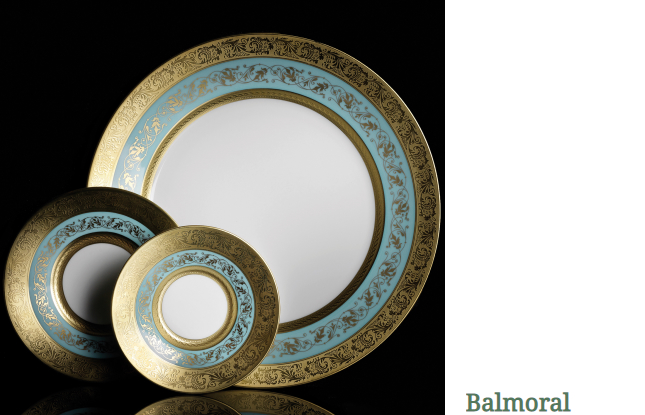
The offspring of the Havilands were involved in the family business for several generations.
In 1941, a Haviland heir acquired the “Charles Field Haviland” brand in homage to the memory of his grandfather; he decided to stamp his brand on chinaware produced by his company, which was renamed “Robert Haviland & C. Parlon” in 1949.
In 1950 two young men, Michel Ardant and André Parlon, joined the company and helped it successfully navigate the major technological and creative transformations of that period, without losing sight of their predecessors’ standards of excellence. They remained at the helm of the company for forty years, aiming to achieve high ambitions.
Robert Haviland & C. Parlon joined forces with well-known museums in making reproductions of exceptional designs. Hence, the Russian pattern created in 1762 by Falconet for Empress Catherine II of Russia was reproduced for New York’s Metropolitan Museum of Art; the Rossini cup for the Paris Opera; and Peony dishes and cups were adapted from dinnerware produced by the Vincennes porcelain manufactory in 1750, for the Musée des Arts Décoratifs. Other examples are the painted Monet dinnerware set designed for the Claude Monet Museum in Giverny, and of course the Ladies and the Unicorn series inspired by the Cluny Museum tapestries in Paris.
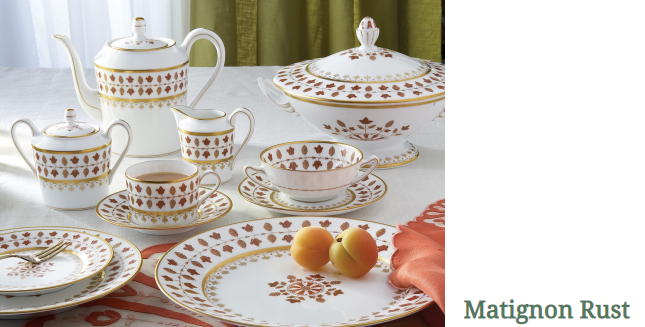
In 1984, the Robert Haviland & C. Parlon porcelain company became a member of the “Comité Colbert”, a select association of the most prestigious French luxury goods producers. The company subsequently began making signature pieces and chinaware for fine restaurants and luxury hotels, as well as the French and Belgian Embassies, European Union delegations, the French Prime Minister’s residence, and the royal families of Morocco, Bahrain and Oman, to name a few.
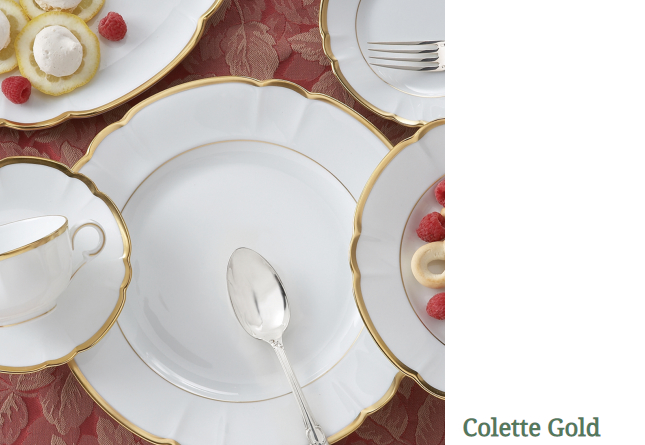
J. SEIGNOLLES
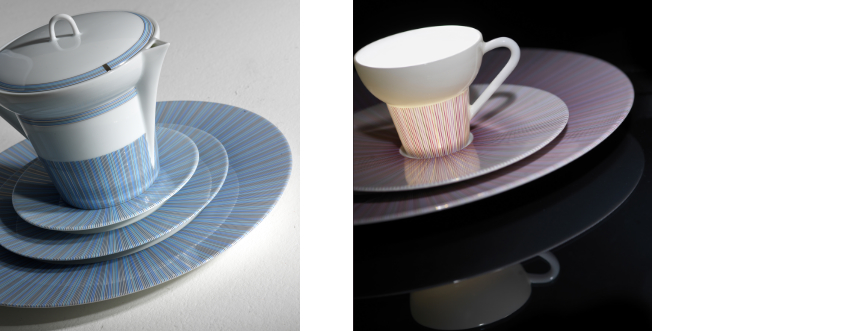
Inaugurated in 1825
In 1825, Francois Baignol set up business at “LA FABRIQUE, one of the first factories specializing in porcelain production. As a true innovator and visionary, he was the first to pioneer gas firing techniques in Limoges, sparking a veritable revolution in the porcelain making profession. Thanks to its high firing techniques, J. Seignolles became the first manufacturer in Limoges to craft long-lasting porcelain decorations unaltered by time and guaranteed to be dishwasher safe. Artisans strive to combine the time-honored tradition of elaborate inlay ornamentation with a more updated collection created by renowned designers.
In 2008, the factory was awarded the “Entreprise du Patrimoine Vivant” (Living Heritage Company) award by France in recognition of its excellence for “made in Limoges” and in honor of artistic skills which have only grown more exceptional under the test of time.
How to Decorate Fine Porcelain:
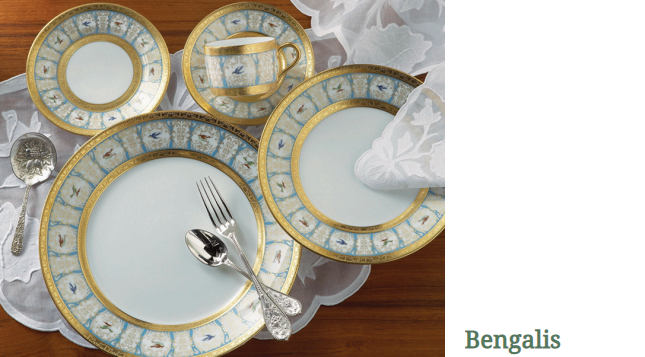
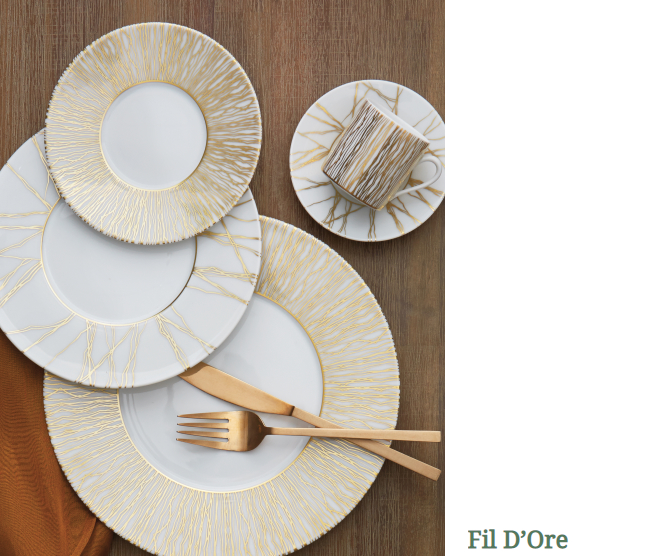
There are multiple decoration techniques: Decals (or transfers), hand painting, inlaying and sanding. All these techniques require exceptional manual skills and craftsmanship.
Litho decorations are printed with oxides on transfer paper which is soaked in water at the time of application.
The decoration is then delicately lifted from the paper by the decal applier, and painstakingly applied to the white porcelain. This difficult operation is further complicated by the complexity of decals which must adhere perfectly to rounded shapes without any visible seams.
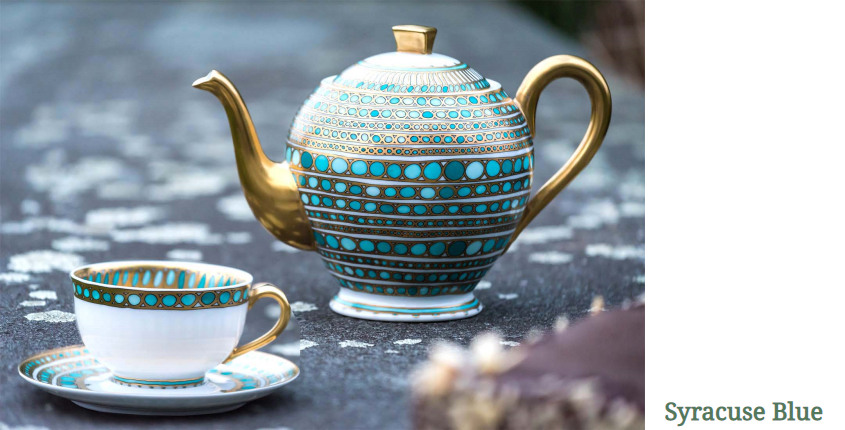
Hand painting requires great dexterity. This technique is notably used for painting the fine borders around plates and serving dishes, or for garnishing handles and knobs on pouring pots and soup tureens.
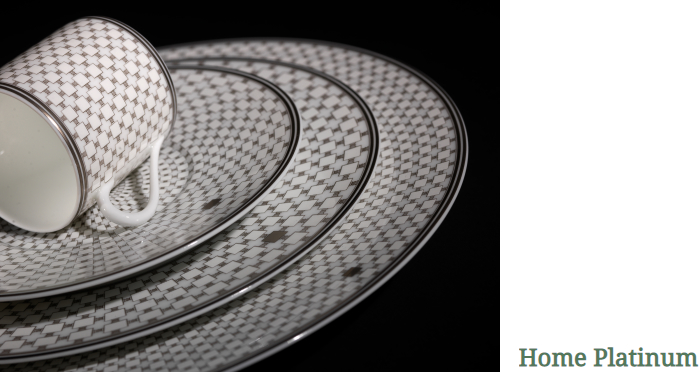
Inlaying is a highly luxurious method of ornamentation requiring an entire series of operations entrusted to expert hands. It consists of engraving chromo decorations directly into the porcelain, after having first protected the rest of the piece with a coating of wax. Then the engraved motif is covered with gold or platinum powder, fired again, sanded, polished, and burnished with agate for an incomparable shine.
More than thirty artisanal processes in as many days are carried out by loving hands, to obtain just one piece of fine chinaware manufactured and decorated by R. Haviland & C. Parlon and J. Seignolles. We hope your appreciation of these two fine brands will grow over time, just as Limoges porcelain has withstood the test of time. Available in North America through Mottahedeh.