





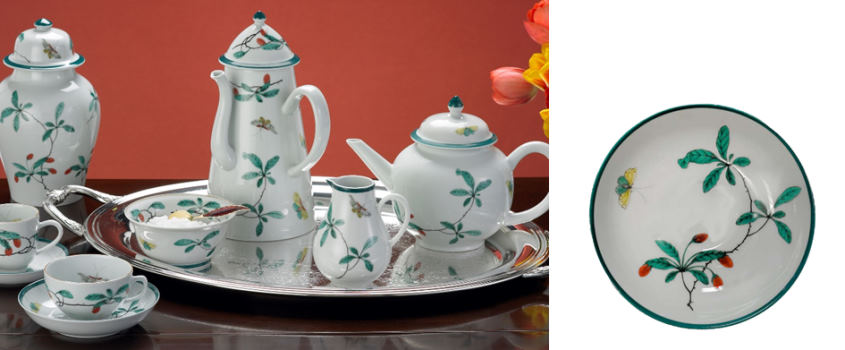
This is the Duke of Gloucester dinnerware.

The vibrant fruit and delicate golden brushstrokes of this dinner service have become a favorite of connoisseurs worldwide, but originally the pattern was quite rare. The Colonial Williamsburg Foundation and the Metropolitan Museum of Art own pieces as well as it has been part of the Royal China Company’s archival collection. William Henry, Duke of Gloucester was the brother of King George III of England during the American Revolution era. In our travels, we have found variations of this pattern that were made for members of the English Royal Family and originally produced at the Chelsea Manufactury of London in the mid to late 1700’s.
A good idea is often elaborated on by many, and in its popularity, becomes a “style”. Or in other words, imitation is the sincerest form of flattery.
This illustrates the point that a good idea is often elaborated on by many, and in its popularity, becomes a “style”. We have witnessed this phenomenon in today’s market regarding “The Duke” as painted toleware, stoneware, and crackle glazed products. When you are looking for this style, look for quality and you will not be disappointed.

I can let you know that I do not do well in quiet and rarified places such as the muffled library or carefully curated museums. These places just make me want to sleep; they are so calming. A museum purpose as an institution is to care for (conserves) a collection of artifacts and other objects of artistic, cultural, historical, or scientific importance.
The opposite reaction was what I felt the first time I traveled with Mildred Mottahedeh to visit the Charleston Museum in South Carolina. This was a couple of weeks after I came on board at Mottahedeh. I felt like an imposter. It was amazing. She was a giant of porcelain history. She was welcomed into the underground level collections area and I was welcomed by that association. Mildred moved easily in the museum world because she and Rafi had been wholesale antique dealers for many years, and knew what to look for in great decorative objects and dinnerware. They knew what was authentic and strove to be true to it in reproductions. The museums understood this.
It was fascinating to see a collection from the perspective of a curator. From the human side, they are intensely curious to know about the person’s life that created an object or a work of art. Why would it be important? They, in turn were fascinated by the original idea and then, as all good collectors do, would try to collect variations on the original theme.
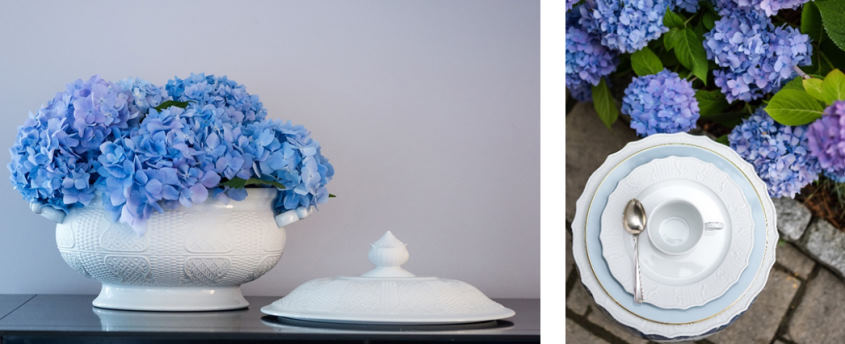
To Illustrate this point, look at the Prosperity Tureen produced with Mount Vernon. The original was salt glazed stoneware featuring very detailed scroll work. It was owned and used by President Washington and his wife, as evidenced by shards of this porcelain on Mount Vernon property.
We decided to make recreate this well-loved dinnerware, only this time in hard porcelain. It would allow it to remain as unglazed bisque on the outside and glazed on the well, showing the beautiful detail. Five different Staffordshire tureens in museum collections were reviewed and what we considered the best elements of each were fused into one completely new and original tureen. This was accomplished by laser scanning and printing the shape with state-of-of-the-art technology.

The era before the invention of industrial production developed the most diverse and shapely porcelain of any era and was the heyday of this artform. Items were only affordable by nobility or the very wealthy. One such outstanding pattern is known as Mandarin Bouquet. Winterthur Museum and Gardens in Deleware, founded by Henry Frances DuPont, has a premiere collection and we have produced several complex and highly decorated pieces.
Through our relationship with great museums, we are able to identify and educate ourselves about the enduring designs of former times and bring them to life today. The backstamps of the licensing museum is printed on the back of the plate and a portion of the sale of these items goes to the museum for their support. We hope you will learn more about the history of porcelain and support the important work of our museums as the keepers of the flame of culture.